Finally Letting Go of a Long-Held Worry
📖 I Should Have Done It Sooner_Kim So-young
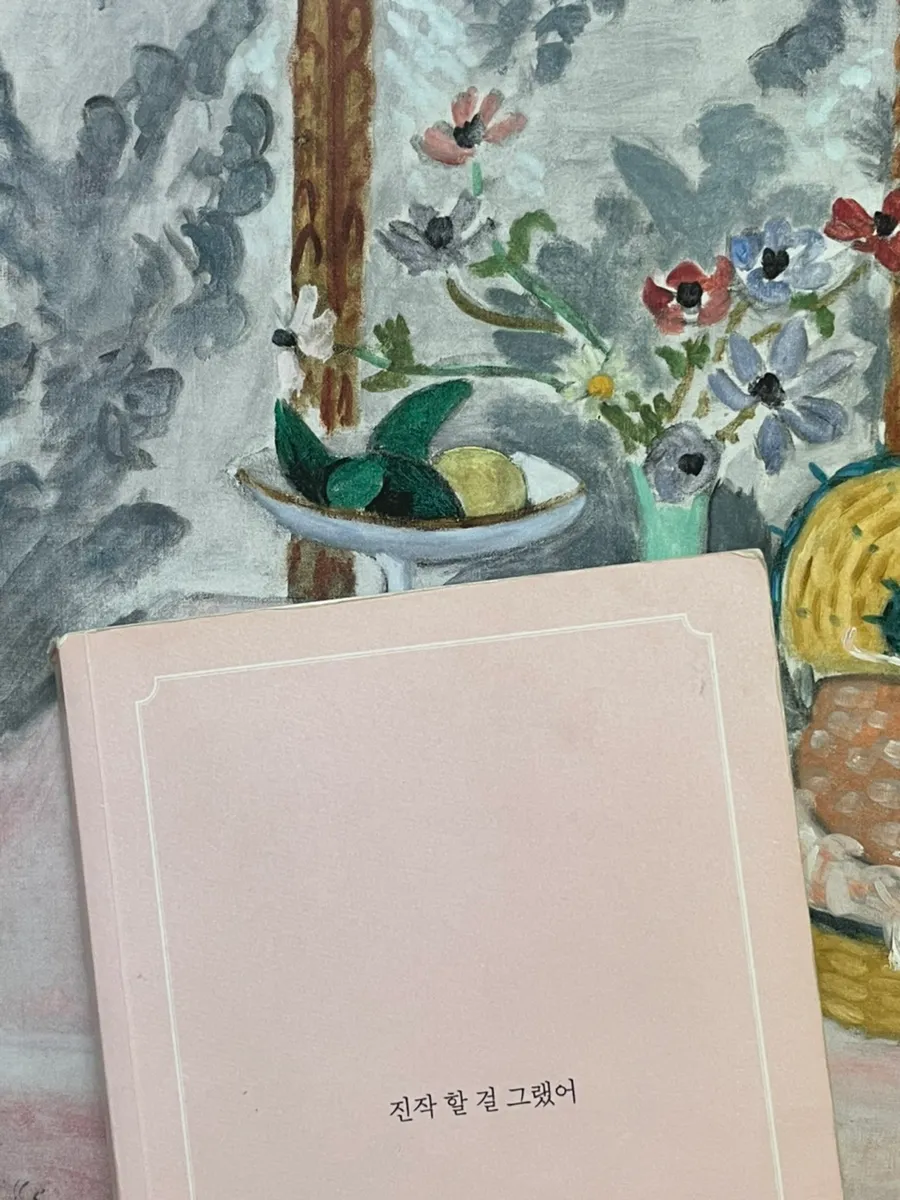
Just the shift in my thoughts from ‘Can I do it?’ to ‘I want to try it’ makes my heart flutter. Her story of boldly transforming into a bookstore owner after quitting her announcer job to pursue what she loves and wants to do was wonderful and enviable. As I immerse myself in her whispered tales of charming Japanese bookstores and the times she overcame helplessness by reading to her heart’s content, I find myself sketching out a vague, romantic future. I, too, envision the moment I’ll happily murmur, ‘I should have done it sooner.’
📝 Thoughts and Sentences I Loved
pg.60
Uchinuma-san believes that the survival and future of bookstores are possible through this ‘multiplication strategy.’ Utilizing the bookstore as a furniture showroom, or encouraging people to stay by drinking beer or enjoying lectures there, is BnB’s survival strategy. The idea that ‘books X something’ creates synergy, generates diverse revenue streams, and enables stable bookstore operations has influenced many independent bookstores that emerged later. The number of people seeking small spaces that reflect the unique personalities of each bookseller has also increased. Could a multiplication between bookstores and readers even be happening?
**
pg.98
Suddenly, I remembered an interview with Masuda Muneaki that I read in the Tsutaya issue of
pg.103
I used to think, ‘Lively, handsome, cute, kind – isn’t that enough? Do I really need to be understood to my deepest core?’ But as I’ve gotten older and my worries have grown, the inability to have deep conversations with a partner has become frustrating.
pg.108
Especially on the master bedroom bed, books are piled high around each of our pillows. Usually, there are five or six, sometimes even dozens, scattered about, but we never nag each other to tidy them up. Almost every night, we lie side by side, reading whatever book we feel like according to the day’s mood. Sometimes, if curious, we peek at each other’s books, or stroke the head of the one who fell asleep first. How desolate our bedside would be if we hadn’t shared the joy of reading before falling asleep.
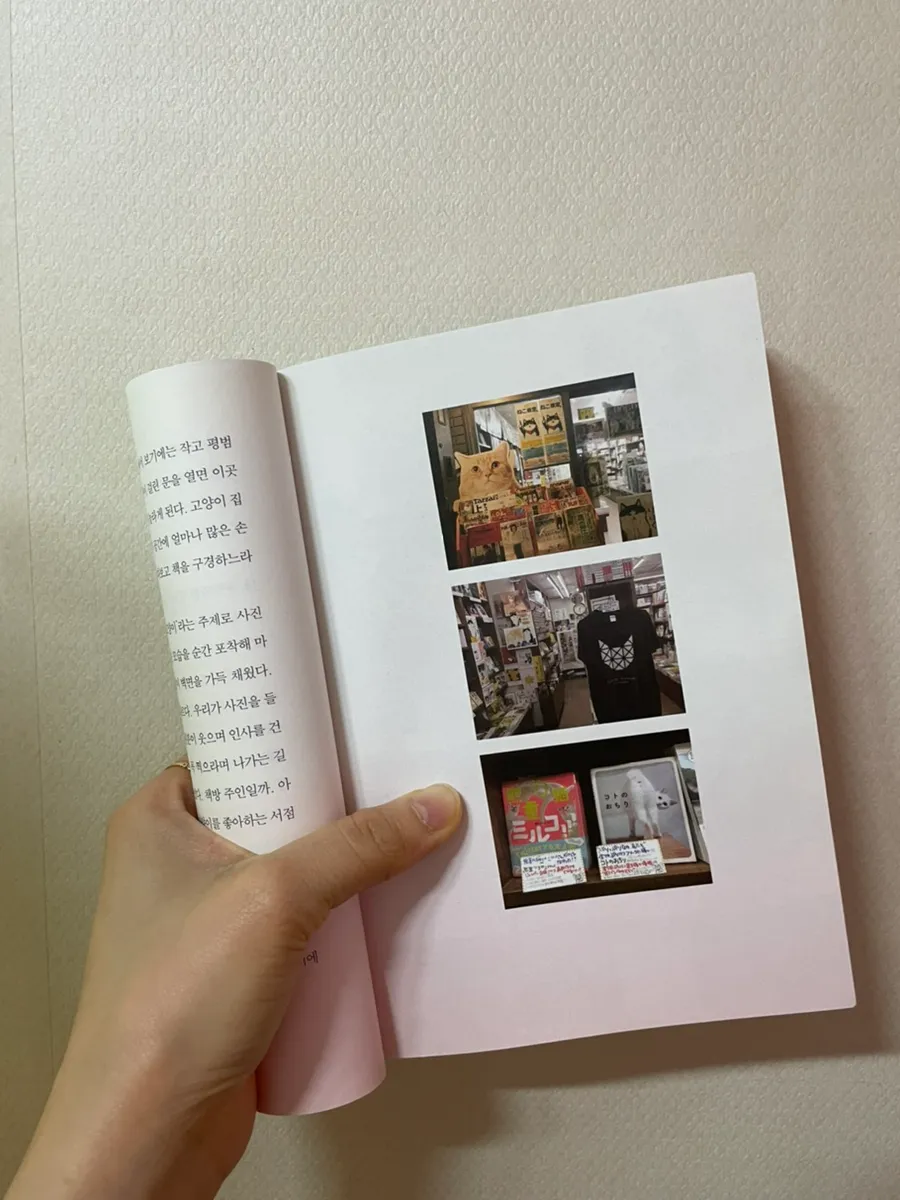
pg.128
Everyone, at some point in life, encounters such a period. A time when no matter what you do, no sincerity seems to get through. After going through a period of self-blame and self-torment, all I could do was wait. So I delved deeper into books. I sought solace by reading novels that allowed me to dwell in imagination rather than non-fiction, and theoretical and history books detached from reality.
pg.194
It’s when I feel a current passing between the person who curated the bookshelf and myself. For example, discovering an unread novel by a favorite author, or finding an interesting new release in a field I’m usually interested in. I get excited when I encounter a bookshelf that aligns with my taste. Once, in a section dedicated to books about ‘love,’ I discovered Sidonie-Gabrielle Colette’s
pg.201
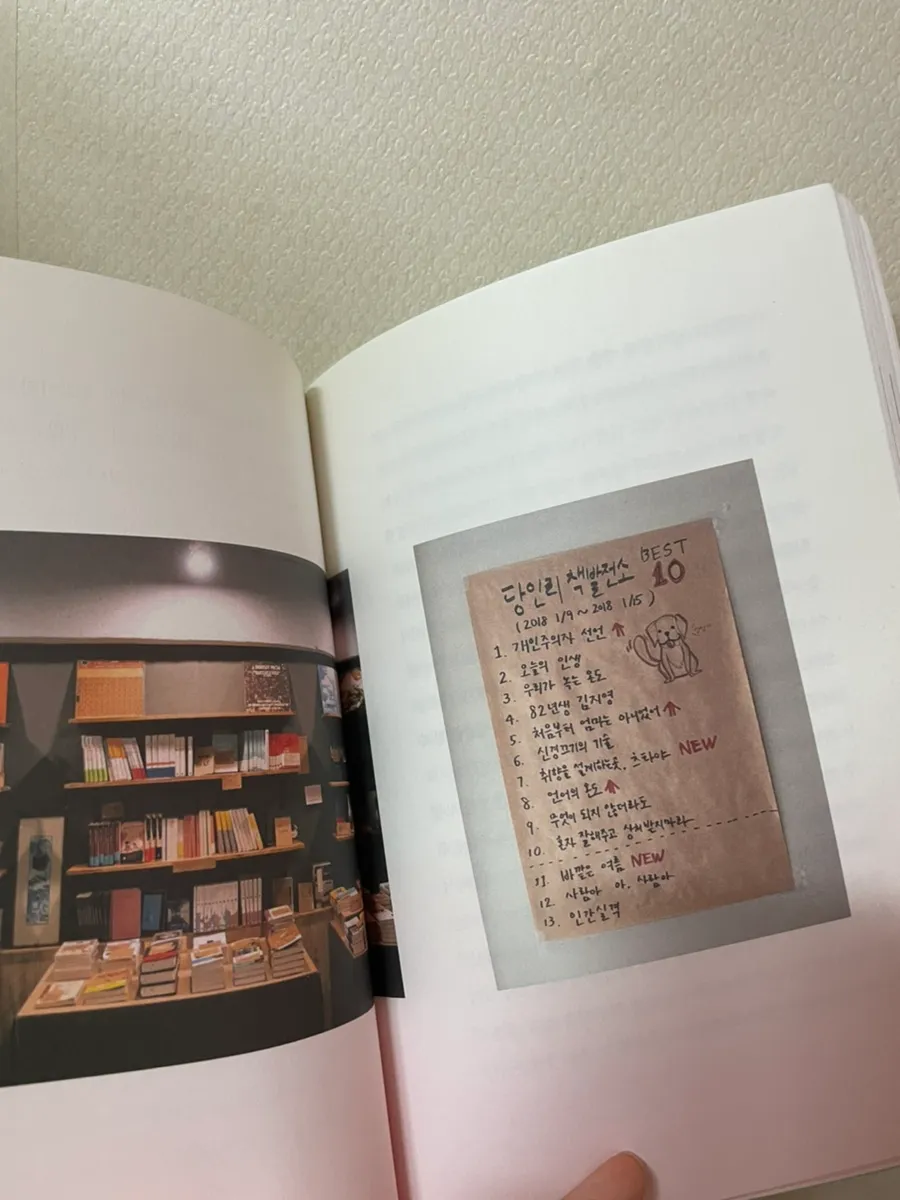
What’s great about neighborhood bookstores is that no matter what you do, you don’t need approval from a manager or department head. Even if it’s not carefully selected copy, or a meticulously crafted print advertisement, even a clumsy attempt using Post-it notes is fine. As long as it’s accompanied by book curation brimming with the bookstore owner’s personality.
pg.202
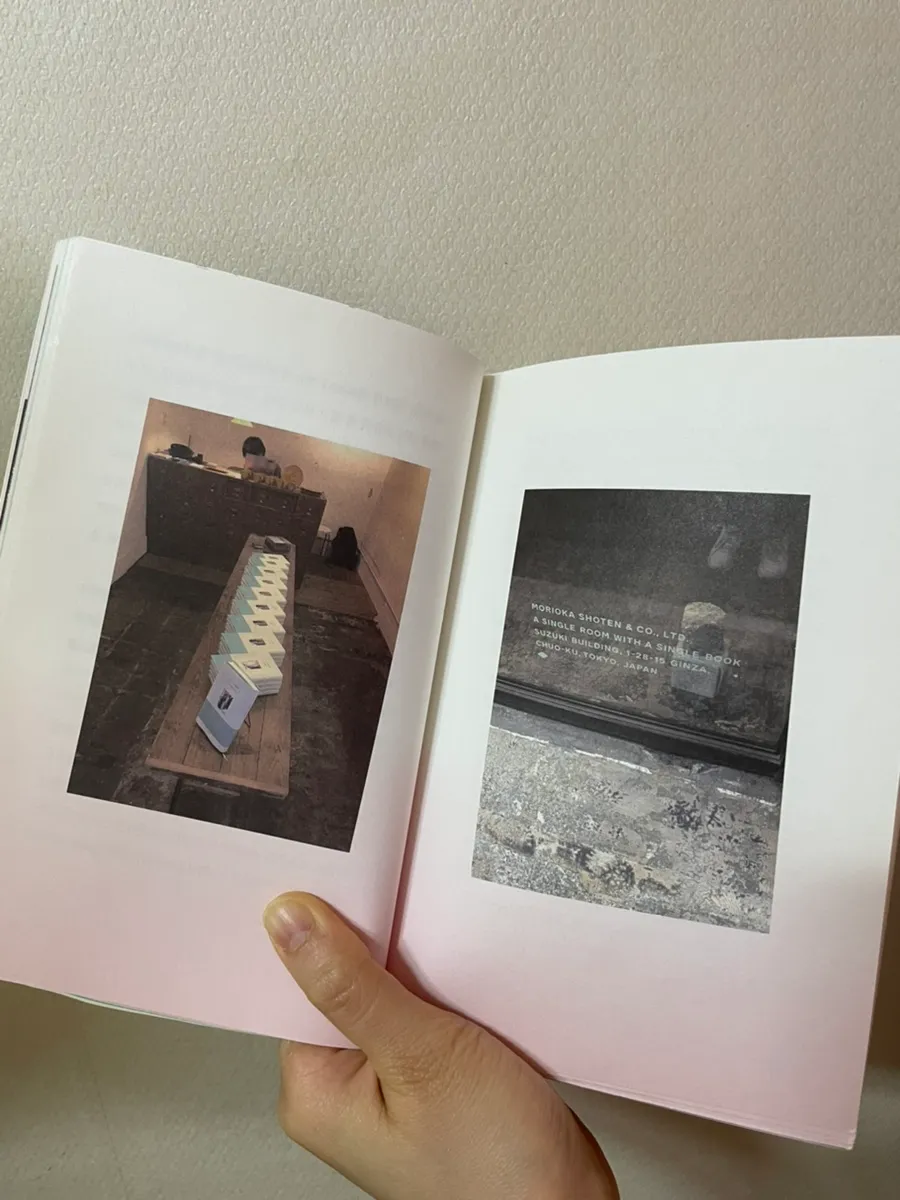
The spaces where Haba undertook bookshelf editing work were truly diverse. From bookstores and book cafes to furniture stores, airports, art museums, apparel select shops, hotels, academies, hospitals, banks, department stores, flower shops, organic food select shops, corporate training facilities, sports goods stores, large corporate research institutes, consumer cooperatives, and even e-book stores. Isn’t this an incredible amount of work, enough to proudly declare, “My profession is book curator!”? I was also surprised by the fact that such diverse demand for books exists in places other than bookstores.
**
pg.206
Whether a place with bookshelves is a bookstore or not, a bookshelf is a continuous conversation between the person who placed the books on it and the person who takes them off. The books on the shelf speak to the reader. In a randomly opened book and a single line, someone might find a dream, shake off a long-held worry, or gain the vigorous energy to live through the day.
pg.209
The theme of the Dirabo Library is (surprisingly) ‘dreams.’ The concept is that when customers discover, nurture, and strive to achieve their dreams through reading, the bank can always provide financial assistance. Presenting the concept of ‘bank = dreams’ rather than ‘bank = money,’ and emphasizing that financial services are not merely about borrowing or growing money but also a means to achieve dreams, felt fresh.
pg.218
Placing books with similar themes next to products for sale might seem like something anyone can easily do. However, having actually run a bookstore, I realized that this seemingly easy task was anything but. Creating narratives between books and arranging them to flow naturally requires rich imagination and critical thinking at every step. If books are merely displayed because their titles sound plausible, customers will have no reason to pick them up, and they will ultimately just occupy valuable space.
pg.247
Looking back, my reading habits were formed thanks to my mother, who diligently took me to places with books and filled my surroundings with them. I realized this only after turning thirty. I used to think I liked books because I was naturally good at it. If my parents hadn’t helped me as much as they could to keep enjoying reading, I might have drifted away from books at some point.
pg.260
There was a time when I thought of myself as a person with a unique personality and unconventional tastes, but whenever I stood at a crossroads of choice, I always compromised with the phrase ‘for now,’ maintaining a stable position and striving to be an ordinary person. For someone like me, simply throwing in my resignation, becoming independent from the company, and opening a bookstore was a huge adventure for my otherwise unremarkable life.
pg.272
“Why do you want to quit? Is work difficult? Or do you want to do something else? Is someone bothering you? Or do you just want to rest a bit?”
Depending on the customer’s answer, the book I recommend might be <Hoesa Geumandugo Eotteoke Bonaesyeonnayo?>, or
pg.296
What kind of person would I be if there were no books? It’s utterly difficult to imagine. I believe that the sentences I’ve read over 30 years have steadily accumulated within me, forming who I am today. The reason I, a person not prone to leaning on others, have nonetheless not felt lonely or despaired when things didn’t go well, is always thanks to books speaking to me and telling me stories by my side. I hope people never forget the power that books and sentences hold.
pg.310
A German couple who spontaneously acquired a neighborhood bookstore in Vienna, Austria, only began to ponder what to do next after the acquisition. Day and night, they tap on calculators, debate, and talk on the phone, constantly deliberating, but it “becomes an amazing idea, then completely absurd, then impractical, then our future again, and then sometimes the path to our ruin.” I, too, only realized after starting my own bookstore that visiting a bookstore as a customer is very different from operating one. I learned firsthand that running a bookstore isn’t just for fun; it’s a matter of livelihood. Paradoxically, precisely because of this, you need your own philosophy to get back up every time you falter, and you can only see it through to the end if you genuinely enjoy it.