I Don't Like Obvious Endings.
📖 Japmunjip_Murakami Haruki
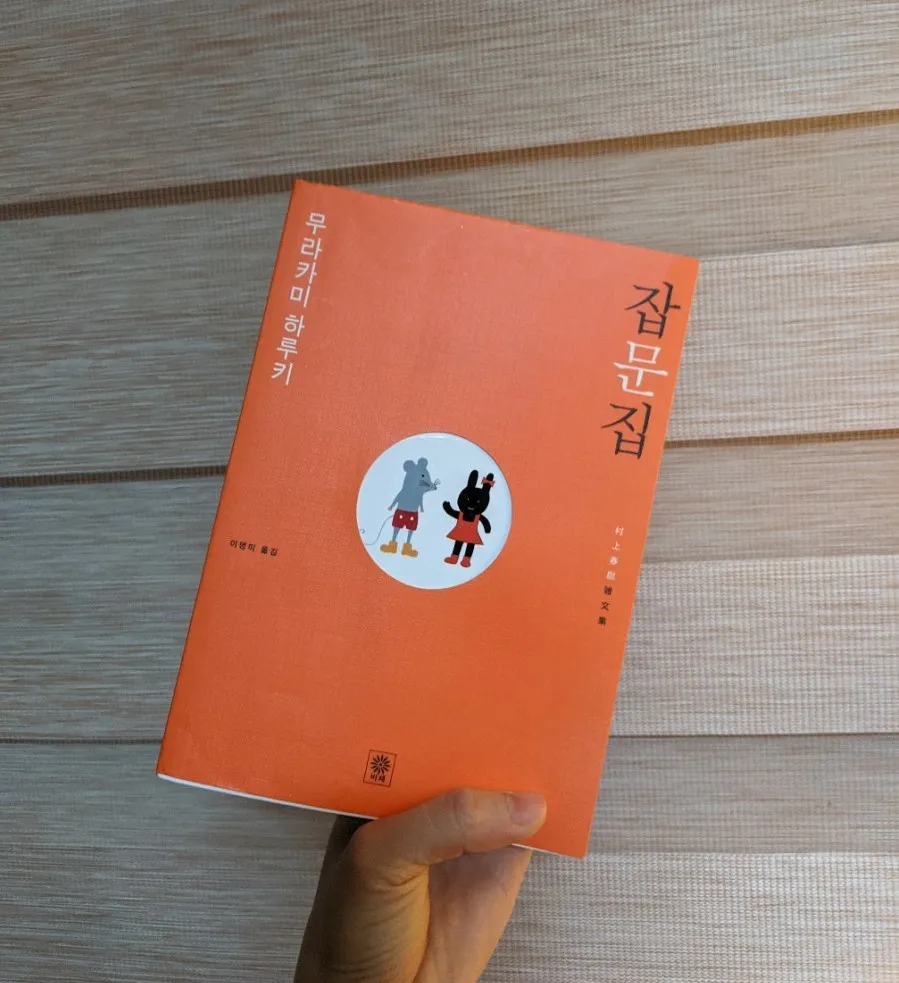
Come to think of it, I haven’t read many of Murakami Haruki’s works. The novel
I finally finished a book that’s like a Haruki encyclopedia, written by Jay Rubin, who translated many of Murakami Haruki’s works into English. Then, suddenly, I felt an urge to read Murakami Haruki’s
The more I read about Murakami Haruki—articles he wrote himself or those written about him by fans spread across the globe—the more it seems transparently proven that he is a truly unique, interesting, and definite person. Instead of constantly trying to define and analyze the mind or anything else, let the days of confusion flow as they may, and let’s just write about oyster fritters.
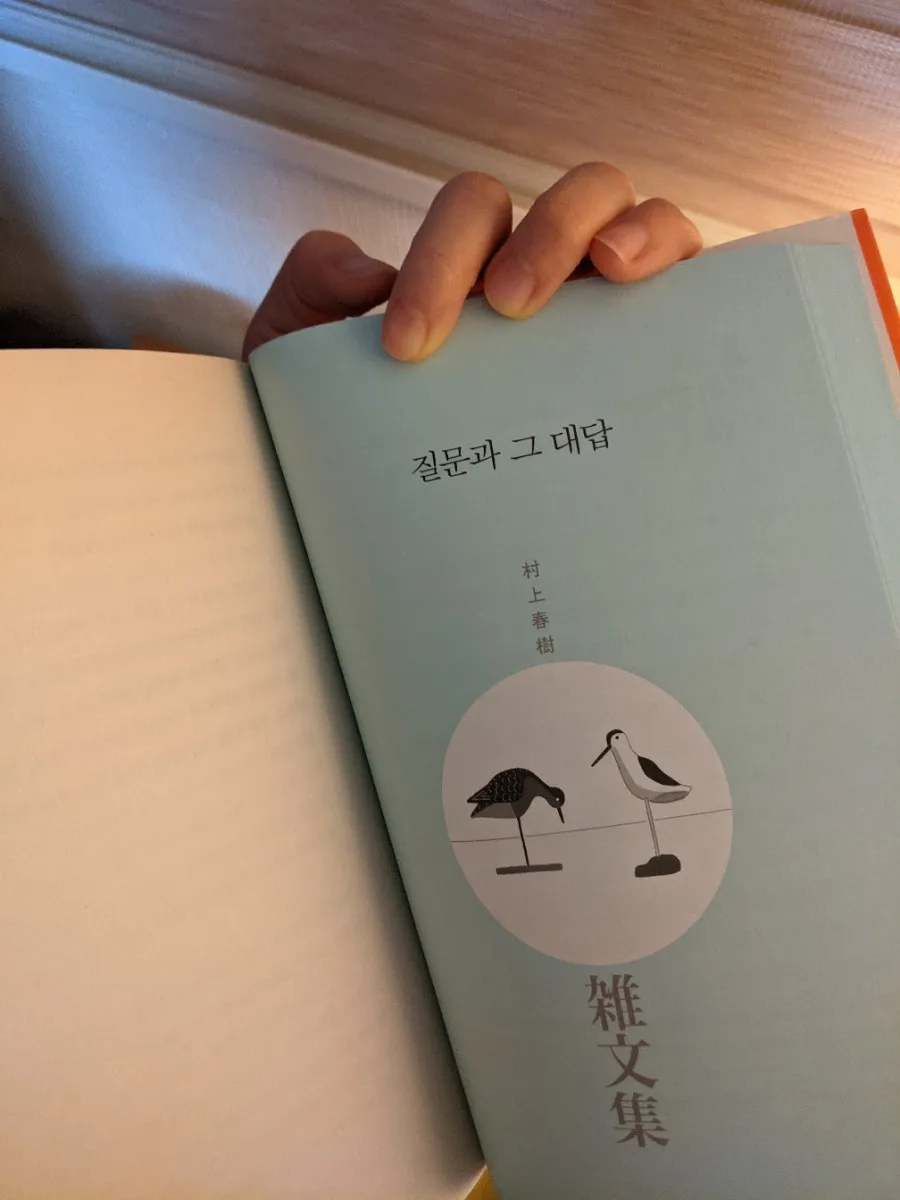
📝 Thoughts and Sentences I Loved
(There are so many; I sparkled while reading because there was so much to collect.)
When I first started working little by little, taking on commissions, an editor told me, “Mr. Murakami, it’s better to work with a somewhat rough approach at first. A writer is someone who grows while receiving payment for their manuscripts.” At the time, I was half-skeptical, wondering, ‘Is that really true?’ But reading my old manuscripts again, I’ve come to realize, ‘That might actually be true.’ It means that instead of paying tuition, I got paid for my manuscripts and gradually started writing better. It feels a bit brazen, I must admit.
**
It goes without saying, but my mind is made up of all sorts of miscellaneous things. The mind is not made solely of coherent, systematic, and explainable components. I gather the detailed, sometimes uncontrollable things within my mind, pour them out to create fiction = stories, and then reinforce them. But at the same time, it’s sometimes necessary to output them in their raw form. Because trivial worldly affairs that cannot be fully contained within the form of fiction also remain as small remnants. I gradually collect such material in the form of essays (miscellaneous writings).
**
**
When asked what a novelist is, I generally always give this answer: “A novelist is a person who makes a living by observing many things and making few judgments.”
It’s almost impossible to describe oneself within four manuscript pages, isn’t it? It’s exactly as you said. In my opinion, it’s a meaningless survey, if you really think about it. However, even if it’s impossible to write about oneself, it might be possible to write about, for example, oyster fritters within four manuscript pages. So, why not try writing about oyster fritters? If you write about oyster fritters, the correlation and distance between you and the oyster fritters will automatically be expressed. In other words, if you delve deep enough, it’s also about writing about yourself. That is what I call my ‘oyster fritter theory.’
**
**
Fitzgerald’s phrase, “If you want to tell a different story, tell it in a different way,” was my only pillar of support, but it was not that simple. I kept writing, thinking that by the time I was forty, I would be able to write a little better. I still think that way. Winning an award is very joyful, but I don’t want to be fixated on tangible things, and I also think I’m past the age for that.
**
**
Honestly, I’ve been writing novels for nearly thirty years, and I’ve consistently done what I like, in my own way, so I’ve rarely thought about whether I’ve contributed something or not. And personally, I believe the most precious award or honor for a writer is the unwavering passion of their readers, and nothing else.
**
**
One major purpose of my writing novels is to share a ‘living thing’ called a story with readers, and using that shared experience as a lever, to bore individual tunnels between hearts. It doesn’t matter who you are, how old you are, or where you are (whether Tokyo or Seoul). The important thing is simply whether you truly embrace the story I wrote as ‘your own story.’
**
**
My way of listening to music is basically the same even now. I listen alone and feel, ‘Ah, this is good.’ I rarely discuss it with others.
**
**
The accumulation of continuous value judgments shapes our lives. It could be paintings of people, or wine, or cooking, but in my case, it’s music. Therefore, the joy of encountering truly good music is immeasurably great. To express it extremely, I even feel grateful to be alive.
**
**
Liner Notes: Explanations attached to records to aid appreciation
**
**
It’s just an object, you might say. Of course, that’s true. The most important thing in music is the excellence of the performance itself. That goes without saying. However, what I find equally wonderful is the fact that we can entrust a precious part of our mind or body to the excellence of that music. And there is something in jazz music that only jazz can embrace. That is why we can keep jazz music so close and love it.
**
**
The arduousness of continuously creating something, whether music or writing, is fundamentally not much different. If one cannot maintain an active and positive attitude, power or depth disappears from the created work.
**
Our lives are completed by the accumulation of memories. Isn’t that right? If we had no memories, we would have nowhere else to rely on but our present selves. Through memory, we can somehow bind our existence together, identify ourselves, and at least establish a core of existence – even if it’s just a hypothesis.
**
**
And in most situations, stories – as white magic, so to speak – exert a powerful healing ability that is unparalleled. It is something we often experience when reading an excellent novel. A single novel, a single line of words, heals our wounds and redeems our souls.
**
**
But what exactly does ‘pure’ mean? If it merely means rejecting external chaos or contradiction, wouldn’t that simultaneously mean rejecting one’s own bodily fluids = narrative?
That’s why I am very grateful to the translators who translate my novels. It’s an immense joy for my books to meet foreign readers, but at the same time, it’s also quite joyful for me to read my own books – though unfortunately limited to English in the current situation. In other words, it feels like the world of sentences I created has been transformed within another language system, creating a cushion between me and myself, allowing me to relax and feel at ease.
**
**
His (Raymond Carver’s) entire life was filled with hardship and disappointment. He experienced unemployment, fell into alcoholism, declared bankruptcy, his wife and children left, and even his friends distanced themselves, causing him to plummet to the rock bottom of his life. Yet, even in such circumstances, he did not give up the path of literature. A sense of pride, like ‘I am, after all, an American commoner. As an American commoner, I have stories to tell,’ is clearly embedded in his body of work. It was a perspective long neglected in American literature, and his works breathed fresh vitality into the American literary scene of the 1980s.
**
**
Through the translation work of Raymond Carver’s and Tim O’Brien’s works included here, I also learned many things. I believe the most valuable thing I learned is the correct attitude towards writing novels. Such a correct attitude is bound to seep into the writing. And what truly captivates a reader’s heart is not brilliant sentences or an interesting plot, but the atmosphere that naturally emanates.
**
**
When reading a book, there are times when a certain passage simply won’t leave your mind. When I was eighteen, I read a short story by Truman Capote called
“And he buried his head deep in the pillow and cupped his ears with both hands and thought: think of nothing things, think of wind.”
I loved the last sentence: “think of nothing things, think of wind.”
Whether it’s music or novels, the most fundamental element is rhythm. If there isn’t a natural, pleasant, and definite rhythm, people won’t keep reading the text. I learned the importance of rhythm from music (mainly jazz). And following that rhythm is the melody, in other words, the precise arrangement of vocabulary. If it’s smooth and beautiful, there’s nothing more to wish for. And then harmony, the inner resonance of the heart that supports those words. After that comes my favorite part – improvisation.
**
**
Q: What kind of retirement do you envision as a writer?
As I once wrote, I am a long-distance runner. So I hope to live a little longer and write one more novel. I want to keep renewing myself through as many works as possible. I want to continuously upgrade my version.
**
**
Q: Your novels generally have ‘open endings.’ Why do you leave the resolution to the reader?
If it’s a mystery novel, an explanation of the culprit is needed at the end. If it’s an old tale, ‘they lived happily ever after’ must be at the end. If it’s a novel, a conclusion is needed at the end, just as lottery tickets require the announcement of winning numbers and horse races hold significant meaning in their rankings. However, thankfully, the novels I write do not require such clear-cut final conclusions. There’s no need to force something that isn’t necessary. I don’t like obvious endings, because such things don’t exist in most of everyday life.
I believe that writing a novel is, in other words, creating a story. Creating a story is similar to creating one’s own room. Preparing a room, inviting people there, seating them in comfortable chairs, offering delicious drinks, and making them truly like the place. Making them feel as if it’s a place just for them. That is likely the true nature of an excellent and desirable story. Even if it’s an incredibly splendid and luxurious room, if the guest cannot relax comfortably, it cannot be called a desirable room = story.
**
**
The writer creates stories, and then the stories return, demanding deeper immersion from the writer. Through this process, the writer grows and acquires the possibility of developing their unique stories more deeply. It goes without saying that perpetual motion does not exist in this world. However, if we do not neglect maintenance and if the fuel of imagination and diligence passed down from ancient times does not run out, then the historical internal combustion engine will faithfully maintain its cycle, and our vehicle will be able to proceed smoothly forward – meaning, as far as it can go – continuously. I believe in such a ‘virtuous cycle’ of stories and continue to write novels.