Let's Inhale This Meaninglessness That Surrounds Us
📖 The Festival of Insignificance_Milan Kundera
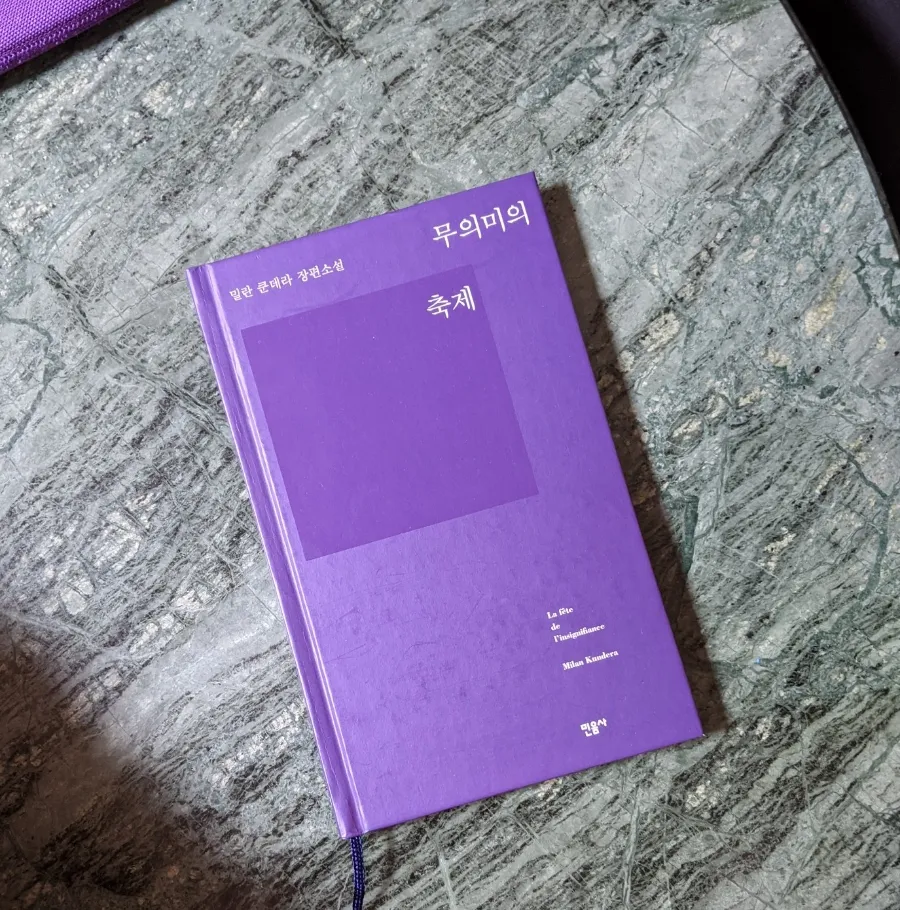
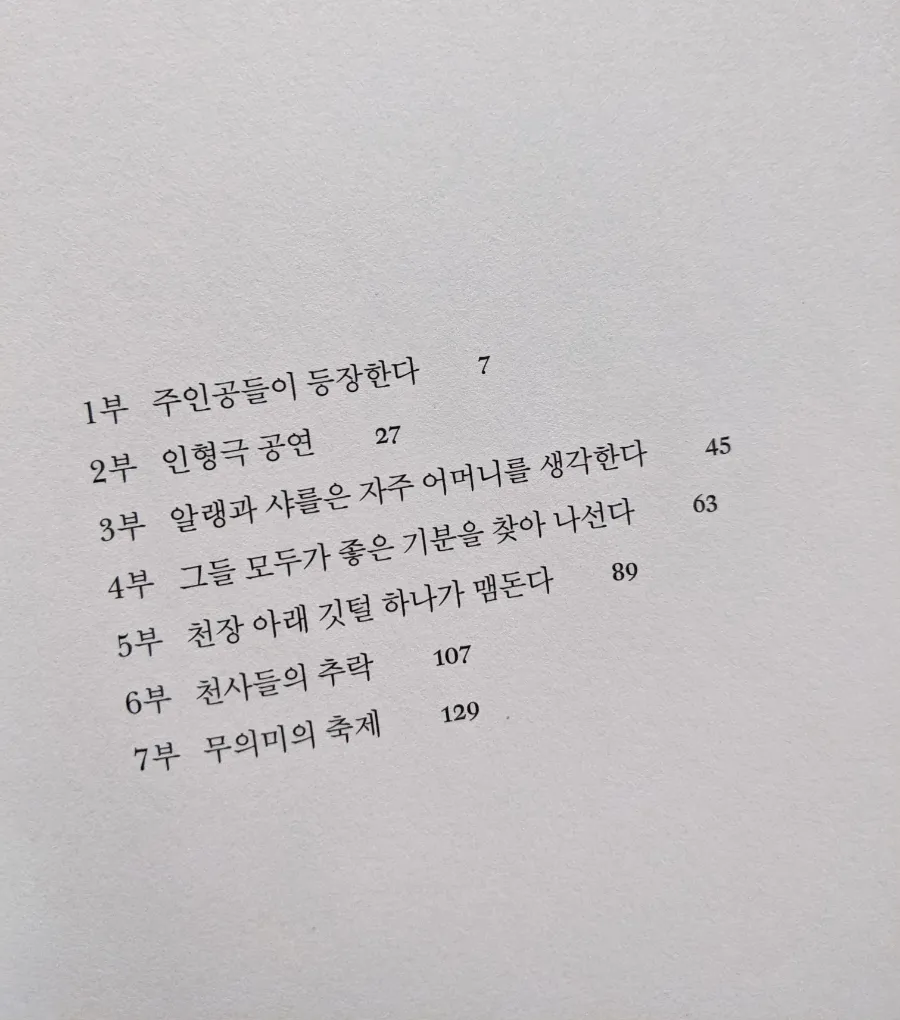
I haven’t yet read Milan Kundera’s The Unbearable Lightness of Being. By chance, I picked up The Festival of Insignificance at a bookstore simply because I liked its deep purple cover. When I first read this novel, I didn’t find it particularly impressive. I trudged through to the end, closed the book, and then completely forgot what it was about because I couldn’t make heads or tails of it. Then, recently, I picked it up again. The impression I got was quite different from the first time.
I still don’t perfectly understand the psychology of the characters in the novel or the story the author intends to convey, but I think that’s the point. As the title suggests, the festival of insignificance constantly surrounds me. There’s no need to understand everything, nor is it possible. Just as we simply came to exist on this earth, let’s fully inhale this insignificance and be beautiful!
📝 Thoughts and Sentences I Liked
“Oh, my friend, so you’re part of the apology brigade. You think you can win people over with apologies.”
“Yes, that’s right.”
“But that’s a mistake. Apologizing means admitting your fault. And admitting your fault encourages the other person to keep showering you with insults and to denounce you to the whole world until you die. That’s the fatal consequence of apologizing first.”
“You’re right, one shouldn’t apologize. But still, I think a world where everyone, without exception, uselessly, excessively, for no reason, apologizes to each other, a world where they cover each other with apologies, would be better.”
**
**
She spoke to him several times, and when she realized he didn’t understand her, she was at first at a loss, but then showed a strangely relaxed demeanor. This was because she was Portuguese. When Caliban spoke to her in Pakistani, she too had a very rare opportunity to cast aside French, a language she disliked, and speak her mother tongue. The conversation they shared in two languages they didn’t understand brought them closer to each other.
**
**
Ramon replied (in French), “I admire your astonishing linguistic performance. But instead of amusing me, it’s plunging me back into sadness.”
He picked up a whiskey glass from the tray, drained it, put it down, then picked up another and said, “You and Charles invented a funny Pakistani language to try and have some fun while serving pathetic snobs at social cocktail parties. The joy of creating something mysterious must have been a shield for you. Indeed, that was all of our strategy. We realized long ago that we can no longer overturn this world, nor reform it, nor prevent it from running its pathetic course. There’s only one way to resist: not to take the world seriously. But in my eyes, our game has lost its power. You’re desperately trying to liven things up by speaking Pakistani. It won’t work. You’re just tired and bored.”
**
**
Then his mother continued, “Look at all those people! Just look! At least half of the people you see are ugly. Is being ugly also a human right? And do you know what it’s like to carry ugliness like a burden your whole life? Without a single moment’s rest? Your last name wasn’t your choice either. Nor your eye color. Nor the era you were born in. Nor your country. Nor your mother. Everything important. The rights humans can have are only related to utterly useless things, things for which there’s no reason to struggle to obtain or write grand declarations of human rights!”
**
**
Alain continued, “These four golden points each represent an erotic message. So what erotic message does the navel tell us?” He paused and then said, “One thing is clear: unlike the thighs, buttocks, or breasts, the navel says nothing about the woman who possesses it, but rather about something that is not her.”
“About what?”
“The fetus.”
“The fetus, right.” Ramon conceded.
And Alain said, “In the past, love was a celebration of the personal, the inimitable; it was the honor of the unique, that which allowed no repetition. But the navel doesn’t just not refuse repetition, it invites repetition. Now, in our millennium, we will live under the sign of the navel. Under this sign, all of us, without exception, are warriors of sex, staring intently not at the woman we love, but at the small, identical hole in the middle of the belly, which represents only one meaning, one goal, the sole future of all erotic desire.”
**
**
“Dardelo, there’s something I’ve wanted to tell you for a long time. It’s about the value of the trivial and insignificant. At the time, I was thinking primarily about your relationship with women. I wanted to tell you about Kaklik. A very close friend. You don’t know him. Yes. Let’s move on. Now, the trivial and insignificant appears to me completely differently than it did then, more powerfully and more profoundly. The trivial and insignificant, you see, is the essence of existence. It’s with us everywhere, always. Even where no one wants to see it—that is, in terror, in brutal battles, in the worst misfortunes. To acknowledge it in such dramatic situations, and to call it by its true name, insignificance, generally requires courage. But it’s not just a matter of acknowledging it; we must love it, learn to love it. Here, in this park, before us, insignificance exists absolutely clearly, absolutely innocently, absolutely beautifully. Yes. Beautifully. Just as you yourself said, a perfect and utterly useless performance… children giggling for no reason… isn’t it beautiful? Inhale it, Dardelo, inhale this insignificance that surrounds us, it is the key to wisdom, the key to good humor, and…”
**
**