Let's not even make small promises.
📖 Let’s not make any resolutions_Yu Byeong-rok’s Poetry Collection
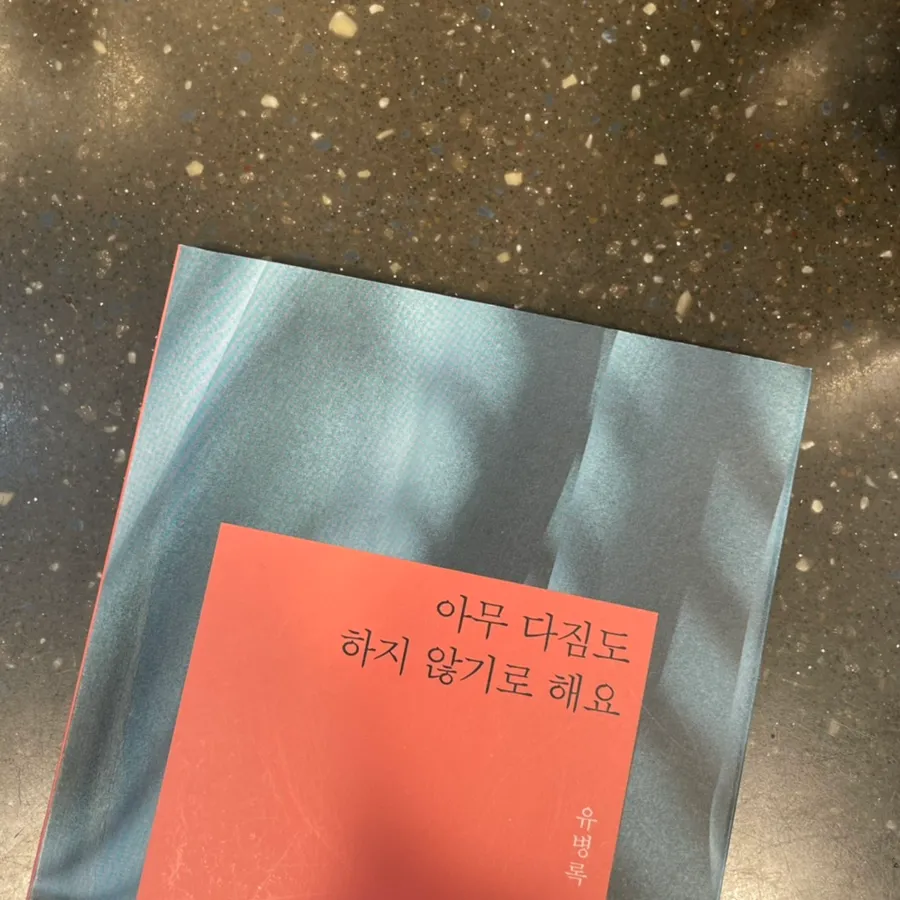
I wondered if sorrow has a limit.
They say God only gives us sorrow we can bear,
but isn’t even this ultimately a sad incantation,
created by humans to overcome cruel sorrow?
I don’t know the details, but it seems the poet lost his son.
Reading poems written with immeasurable sorrow,
I think about sorrow.
It’s sad that sorrow is healed by sorrow,
but if that were possible, I would gladly be sorrowful.
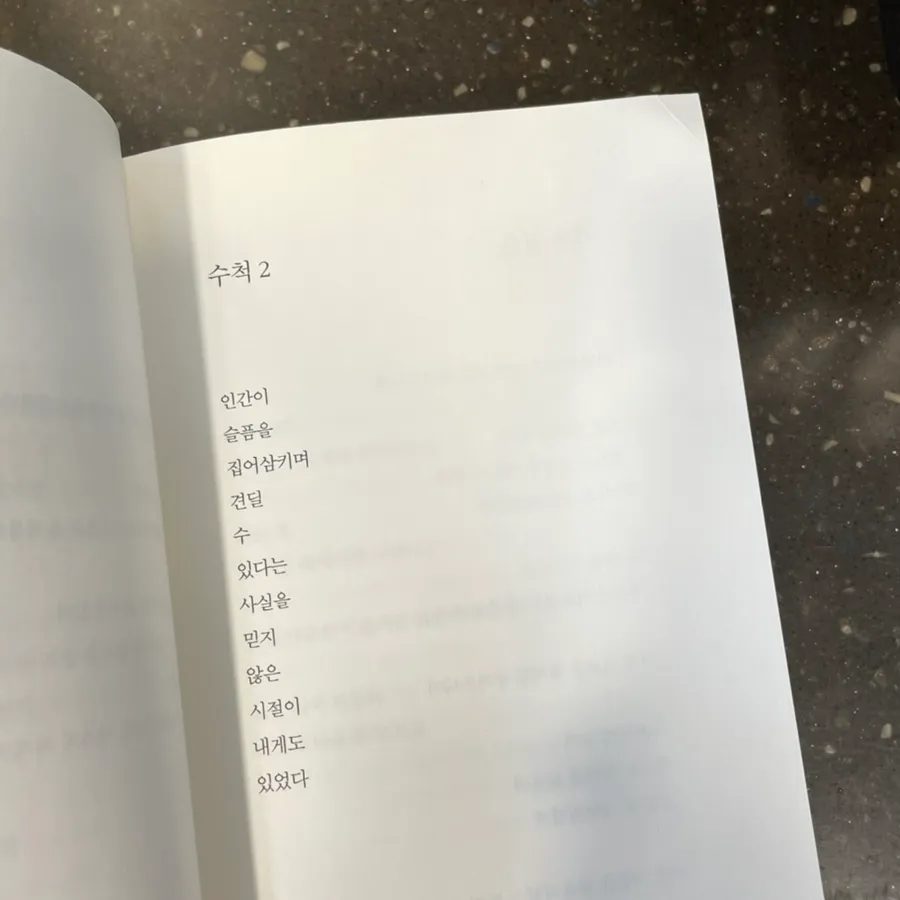
📝 Thoughts and sentences I liked
pg.19
Pretending to be fine
Pretending to be calm
**
At work, I pretend to be a hand and work
At drinking parties, I pretend to be a mouth, laughing and chatting
On the street, I pretend to be ordinary feet and walk
**
If my sorrow were discovered
People would be troubled, and I would be ashamed
pg.46
Because some moods feel like a mistake
**
To change my mood
Should I go eat delicious food?
Should I change my hairstyle?
**
Our moods
change easily even for trivial reasons
**
Because some moods are heavy like a burden
**
Should I go to the public bath?
Should I listen to exciting music?
Will that make me feel a bit lighter?
**
Because some moods feel like a prison
**
Should I move?
Should I travel to a distant country?
**
Memories
scatter even with a light breeze
**
But you
only appear within that mood
**
Because some moods are comfortable like a blanket
**
I bury myself deep
and don’t know how to come out
**
**
pg.90
Let’s
not be resolute this spring
It’s not the first time, after all
**
Don’t make any resolutions
If you open the drawer
how many resolutions would be in there?
**
Let’s not set goals
Let’s be silent about the future
Let’s not even make small promises
**
Even when winter comes
let’s not look back at what we’ve achieved
Let’s not reflect on spring
pg.119
Sometimes, poetry carries too heavy a story for its delicate frame. It holds too many words within clenched lips. When I encounter such poetry, as a greedy reader, I want to pretend to know something and ramble on, but I sense that the more I do, the less I’ll be able to articulate anything properly. There will be little I can say about this poetry collection. I might, just barely, be able to speak about where and how pain resides, and why that place becomes even more vivid after time has swept over it.
pg.123
Once, I briefly encountered him in a hallway of a building in Daehangno. A Yu Byeong-rok different from the one I had known until then. It was not long after a fierce fire had engulfed him, and there was a small literary event. He was serving as the chairman of the Young Writers’ Forum of the Korean Writers’ Association, preparing for the event, so he likely had no way to avoid being there. His eyes, which I glimpsed in the hallway of the event building, were indescribably red and wet, profoundly deep and dark, like a well untouched by human hands for a long time. I pretended not to see his damaged face, unable to even offer a greeting… but “a hole in a sock” is bound to be discovered eventually. The sorrow of someone barely holding on is often like that. I can’t precisely recall when that was. Whether it was autumn, expanding its empty spaces in every landscape, or a completely barren winter, I can’t remember exactly, but it’s clear that it was long before he wrote these words.